What app gamification is actually for
App gamification means borrowing mechanics from games, such as streaks, levels, quests and leaderboards, and putting them inside a product that is not a game. Done well, it makes the useful thing feel rewarding enough that people come back tomorrow. Done badly, it is a layer of confetti on top of a product nobody needed.
The goal is never points. The goal is behaviour: a learner who finishes the module, a patient who logs the dose, a customer who completes the profile, a player who returns on day seven. Every mechanic you add should be judged against that behaviour, and removed if it does not move it.
That sounds obvious, yet most gamification projects start from a feature list. Someone sees a competitor with badges, and badges go on the roadmap. Six weeks later the badges are live, engagement is flat, and nobody can say why. The fix is to work in the other direction: start from the loop, then choose mechanics that strengthen it.
Start with the core loop, not the points
A core loop is the smallest cycle a user repeats: an action, a response, and a reason to do it again. In a game it might be play a round, earn a reward, unlock the next round. In a learning app it is read, answer, see progress. In a habit app it is log, get feedback, come back tomorrow.
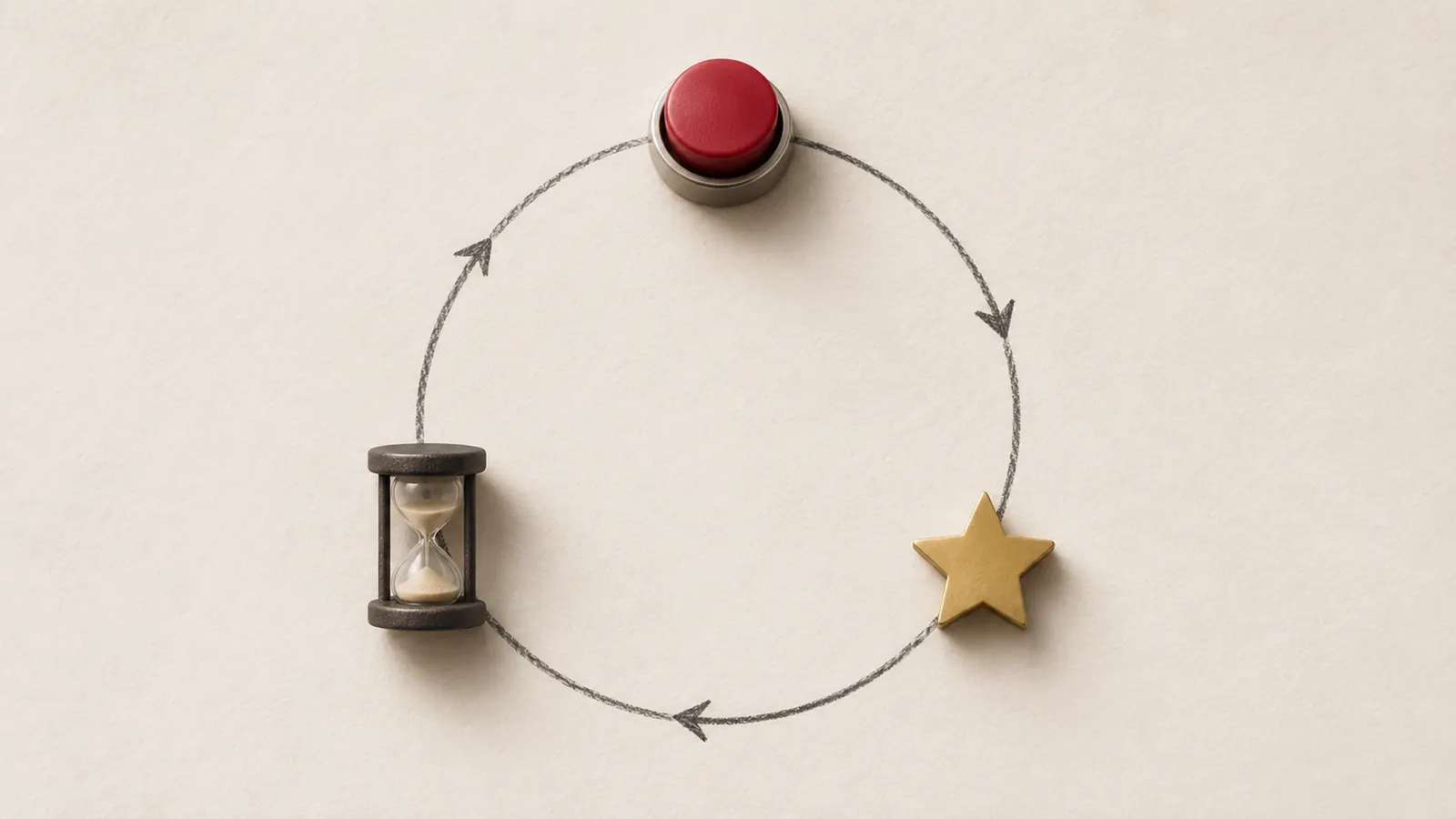
If the loop is weak, no mechanic will save it. Points cannot make a boring lesson interesting. A streak cannot make a confusing logging screen pleasant. So before choosing any gamification mechanics, answer three questions in plain words:
- What is the one action that creates value? Not five actions. One.
- What does the user get back, immediately? Feedback, progress, a result, a feeling of competence.
- Why would they do it again tomorrow? Something unfinished, something to protect, someone waiting.
Takshara, a gamified learning platform we built for corporate training, is a useful example. The brief was blunt: mandatory training gets clicked through, not learned. The loop we designed was simple. An employee walks a 3D virtual office, picks up a quest, reads an article, takes a graded quiz, and earns XP. The Takshara case study shows how quests set a clear next step, so there is always a reason to come back. The mechanics only work because that loop is clear underneath them.
The gamification mechanics that work, and when
Each mechanic answers a different question in the user's head. Pick the ones that answer the questions your users actually have. Where we can, the gamification examples below come from products we have built.
Progress bars and clear next steps
These answer "how far am I, and what do I do now?" They help almost every product, because uncertainty is the quiet reason people drop off. Onboarding checklists, course completion bars and profile strength meters all belong here. They are cheap to build and rarely backfire.
Streaks
Streaks answer "why today, specifically?" They suit daily habits: language practice, fitness, medication, journaling. They work because people dislike losing something they have built. They fail when the activity is not naturally daily, or when one missed day wipes out months of effort. Add a streak freeze or a grace day before you launch, not after the complaints.
XP and levels
Experience points and levels answer "am I getting better?" They suit products with depth, where mastery grows over time. Tie XP to meaningful actions, such as a passed quiz rather than a page view, and make each level unlock something real: new content, a new tool, a visible status.
Quests and challenges
Quests answer "what should I do next?" They package several actions into a goal with a clear finish. They suit learning, onboarding and any product where users feel lost. A good quest is short enough to finish in one or two sessions and ends with a moment of celebration.
Badges
Badges answer "what have I achieved?" They work as records of genuine milestones and as hints about features users have not tried yet. They fail when they are handed out for everything, at which point nobody looks at them.
Leaderboards
Leaderboards answer "how do I compare?" They suit competitive, comparable activities, and they work best among small groups of peers: a team, a class, a friends list. In the skill game cabinets we built for Redplum Games, leaderboards sit alongside attract mode as part of what keeps players at the machine.
Rewards and variable rewards
Rewards answer "what do I get?" Fixed rewards, such as coins for every completed quest, are predictable and fair. Variable rewards, such as a daily chest with uncertain contents, add surprise and anticipation. Use variable rewards sparingly and transparently. The line between delight and manipulation is real, and users notice when they have crossed it.
Social mechanics
Teams, shared goals, gifting and invites answer "who else is here?" They are often the strongest retention lever of all, because people return for each other. They also need enough users to feel alive, so they usually come after the single-player loop is proven.
When gamification backfires
Bad gamification is worse than none. It costs build time, clutters the interface and can teach users the wrong behaviour. The common failure modes are predictable.
- Cheap points. When everything earns points, points mean nothing. Users learn to ignore them, or to farm the easiest action and skip the valuable one.
- Leaderboard demotivation. A global ranking motivates the top ten and quietly discourages everyone else. Someone in position 4,000 has no reason to try. Use small peer groups, weekly resets or personal bests instead.
- Punishing resets. A streak that vanishes after one missed day can make people quit entirely rather than start again from zero.
- Rewarding the wrong thing. Reward time spent and you get idle sessions. Reward clicks and you get clicking. Reward the outcome you actually want, such as a correct answer or a completed task.
- Mechanics without meaning. Badges and XP on a product with no depth feel childish to adults and patronising to professionals.
Audience matters too. For very young children the play itself has to carry the experience. In BubbleBud Kids, learning games for children aged 2 to 7 are organised into five game worlds, and progress is captured through AI-powered assessment that observes how each child plays, rather than through tests or scores. The gamification strategy there is the game, not a points table bolted on top.
How to measure user retention and completion
If you cannot measure whether a mechanic works, you are decorating. Decide the numbers before you build, and track them from the first test.

Retention
- Day-1 retention: the share of new users who come back the day after they start. This mostly tells you whether the first session and the core loop landed.
- Day-7 retention: the share still returning a week later. This tells you whether the loop has a reason to repeat, which is where streaks, quests and social mechanics earn their keep.
- Day-30 retention: useful once you have enough users, and the real test of whether progression has depth.
Completion and behaviour
- Completion rate for the task you care about: the module, the onboarding, the weekly plan.
- Sessions per user per week, to see whether return visits are growing.
- Mechanic engagement, such as how many users ever open the leaderboard or claim a reward. A mechanic nobody touches is a candidate for removal.
Compare against a baseline. The cleanest method is to ship the same product with and without a mechanic to similar groups, then compare retention and completion. Even a rough before-and-after comparison is better than reading enthusiasm off a dashboard. Live analytics belong in the build from day one: the operator admin panel we built for Redplum Games includes live analytics for exactly this reason.
Test your gamification strategy with a playable build
Gamification is a feel problem as much as a logic problem. Reward pacing, how a level-up looks, whether a streak feels motivating or nagging: none of this can be judged from a slide deck. You have to play it.
The fastest route is a small, playable build that contains the core loop and one or two mechanics, nothing more. Put it in front of real users, a pilot client or an internal team. Watch day-1 and day-7 return. Ask what felt rewarding and what felt like a chore. Then change the numbers and run it again.
Two practical rules make this work:
- Make rewards configurable. XP values, streak rules and reward schedules should live in configuration, so they can be tuned between test rounds without a new release.
- Build the test on production-grade code. If the loop works, you want to grow it, not rebuild it.
This is how we approach it at Redplum. In 10 days we build a playable MVP of the core loop, with rewards as tunable configuration and structured playtest notes on pacing and progression, at about 20% of what a traditional human team would cost. That code carries forward into production when the loop proves itself. Takshara reached its first version in 15 days and now runs quests, XP, badges and team leaderboards on web and app. Our game and gamification development service covers the full process, and our gaming and entertainment work, including the motion games built for Immerzio, shows the same loop-first thinking applied to very different products.
Start small, measure honestly and keep only the mechanics that bring people back. That is the whole of a good gamification strategy.